The University Hospital Hradec Králové has a reputation for being a top medical institution, where excellent medicine is performed and where many excellent professionals have been trained. In addition, it is very pretty and – more importantly – has been an economically stable hospital for over 30 years. Medical Tribune interviewed its director and former dean of Charles University’s Faculty of Medicine in Hradec Králové, Professor MUDr. Vladimír Palička, CSc., Dr.h.c., to talk about what it means to run such a hospital. Most of the interview took place around the end of 2019 and the beginning of 2020. Then, before the text was finalised, we were surprised by COVID-19, so we asked Professor Palička a few additional questions.
Was the University Hospital Hradec Králové ready for the COVID-19 pandemic? Of course, we had a carefully prepared epidemic/pandemic plan, but probably no one was completely prepared for a global pandemic and especially for a situation like we saw in Italy or Spain, for example. However, we reacted very quickly, including making the necessary building modifications. We basically had an entire floor in the Pulmonary Clinic ready to meet the conditions of even the strictest isolation regimes. Like the others, we initially struggled with a lack of personal protective equipment, but even that was resolved relatively quickly. Never before in history have we had to dramatically divide our special professional teams into groups. We did this so that it would not be necessary to quarantine all of them if they came into contact with a positive patient. It was difficult, but we managed thanks to the understanding of all our employees. What was the most difficult task for you personally as the director of a very prestigious teaching hospital? The most difficult? To bear the responsibility for the decisions taken. After all, we had to limit patient care, and that is always a difficult decision that bothers me. Similarly, it was a difficult decision to expose some employees to an increased risk of contracting an infection that, at the time, was highly demonised by the media. But our people made it easier for me and often accepted the risk voluntarily as part of their dedication to health care – a risk they already accepted when they chose their profession. I’m talking not only about doctors but also about nurses, supporting staff and more than a hundred student volunteers. COVID-19 took a lot from us in the short term (from an economic point of view, anything from months to two years), but this time was also an opportunity for us to learn and initiate changes. What has this crisis taken from you and what has it given you from a professional point of view as a director and a doctor? Every crisis can and should bring lessons to be learnt. Certainly, this is also the case here. To a large extent, extreme workloads will reveal particular features of some co-workers, which remain hidden at other times. This was a great lesson for me. I am pleased to say that very few were unable to manage the situation – although some of them were a surprise to me. On the contrary, I was pleased by how many of my co-workers responded really well, even better than I had expected. The crisis has moved us in the direction I have long perceived as necessary, namely the development of telemedicine and thinking in this area. And every danger we overcome increases our self-confidence, which is also good.
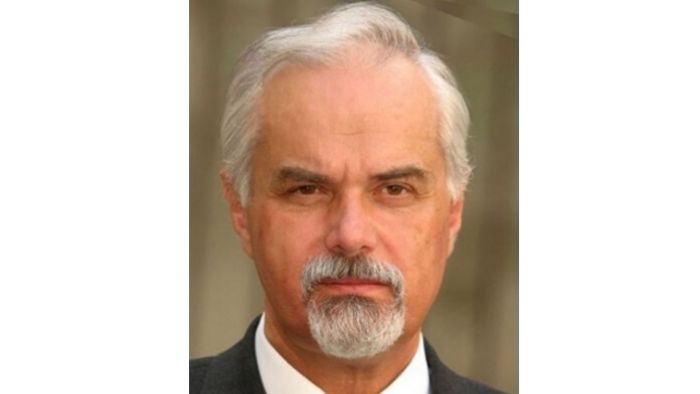
The crisis has moved us in the direction I have long perceived as necessary, namely the development of telemedicine and thinking in this area.
Professor MUDr. Vladimír Palička, CSc., Dr.h.c.
Director, University Hospital Hradec Králové
How have you managed to keep the University Hospital Hradec Králové the most economically healthy hospital in the country? Indeed, we managed to be the most financially healthy hospital among the teaching hospitals in 2019. However, this is not just about last year: Our teaching hospital hasn’t had a negative financial balance for more than thirty years. It is the result of long-term efforts and cultivation. We have an excellent economic department, and we’ve been working intensively with the heads of all clinics and departments for the past thirty years. We discuss professional and medical aspects, as well as operations and economic issues, that each department may have every year. We devote enough time to these discussions with the responsible staff to bring their proposals and requirements closer to the real possibilities and needs of the hospital and its patients. Why is it that some hospitals can be economically stable and others not? This is extremely complicated. As I mentioned, it is necessary to cultivate relationships over the long term. Sometimes we must accept a solution even if we consider it not entirely optimal. It is necessary to assess the urgency of the requirements in terms of operation and medical care. Some wishes need to be postponed sometimes. You have held the position of director of the University Hospital for almost four years. What was your journey from being a doctor in a district hospital to becoming not only a world-renowned expert but also the director of the University Hospital Hradec Králové? I studied medicine in Olomouc, which has an exceptionally good teaching hospital. After graduation, I went to a small hospital in Bruntál, where I spent fourteen years. A small hospital has its disadvantages because it only has a basic ward and performs a limited range of procedures, but it is a very good school for doctors because they have to learn to do everything that regional clinical practice gives them. In a small hospital, a doctor gets to practise to an extent he would often not be able to in a large hospital, or only after a long time. Even in a small hospital, you can do good medicine. After fourteen years, I received an offer to fill the position of chief physician of the biochemical laboratory and at the same time become a regional expert in Hradec Králové, a city where I have been very satisfied to this day. The next step came after November 1989. In 1990, I was appointed associate professor, then I received a specialisation degree in internal medicine and obtained a professorship in the same field. I like to lecture and teach, so over time, I became vice-dean and then dean of Charles University’s Faculty of Medicine in Hradec Králové, a very prestigious position that I still value very much. Four years ago, the former director of the University Hospital Hradec Králové left his position. The Ministry of Health preferred that the hospital recommend somebody from its own staff. Initially, I was not thrilled that I should apply for this position, but my colleagues convinced me that it would be good if the continuity of management from the staff of the Hradec Králové hospital remained. So, I applied for a public tender and was successful. However, when I compare the functions of dean and director, the work is completely different. Education is a classy academic ground, while the position of director involves a hard struggle with thousands of problems every day. It is a much greater responsibility but in a sense also offers more prestige. I really appreciate that I can hold this position. How did your professional career develop? I started as an internist, but then biochemical laboratories began to be built in hospitals. At the invitation of the director of the Bruntál Hospital, I seized the opportunity to build a modern laboratory because I always wanted to work in-between clinical practice and research. Laboratories are close to science and research. I don’t regret my decision. In clinical biochemistry, it is necessary to know all of medicine to some degree in order to interpret the results in a specific patient. Does this mean that even a laboratory worker should know which patient is being examined? Undoubtedly. During my work as the head of the Institute of Clinical Biochemistry and Diagnostics in Hradec Králové, I have always insisted that all those who are preparing for credentialing first acquire a specialisation in the field of internal medicine. This certainly contributes to the accuracy of the diagnosis in every patient. Certainly, this is different than when the clinician only receives a table as an outcome of a laboratory examination, where the individual results are accompanied by asterisks indicating abnormalities. Rarely do clinicians admit that even a “normal” laboratory value can be poor because of the particular patient’s condition. The human body can respond well to heavy stress and adapt to it. For example, it shifts the dissociation curve of oxygen, begins to metabolise fats instead of glucose, switches to anaerobic metabolism with increased lactate production etc. It is often a very wrong tendency to return the patient to “normal”, thus preventing his compensatory mechanisms. I have seen many cases where, after reaching normal values “at any cost”, the patient’s condition deteriorated dramatically. Marathon runners hyperventilate for sufficient tissue oxygen saturation. This is accompanied by changes in the oxygen dissociation curve so that the oxygen supplies the muscles. At the same time, it is converted to anaerobic metabolism, lactate is formed, and the pH of the blood decreases. The body mobilises all the energy to run the marathon. If all biochemical values were forcibly normalised at the 35th kilometre, the competitor wouldn’t reach the finish line. This can be compared to the patients who run a race for their lives. Even for them, the normalisation of biochemical values may not always lead to therapeutic success. I think medicine has moved away a lot from this approach, so these mistakes are not happening now. I would just like to emphasise that normal biochemical values are not beneficial for patients in all circumstances and diagnoses.
In my opinion, the environment is an integral part of the treatment regime. The staff must be patient, friendly, helpful and empathetic.
Professor MUDr. Vladimír Palička, CSc., Dr.h.c.
Director, University hospital Hradec Králové
At one time, you ran an osteocentre at the University Hospital. This is related to my specialisation in biochemistry and internal medicine. In the 1990s, the field of clinical osteology began to emerge in the Czech Republic, which my colleagues from Prague, Professor Jaroslav Blahoš and Professor Stanislav Havelka, along with others, and I began to build. At that time, it was also a bit easier for the teaching hospital to obtain funding, which I succeeded in doing, and thanks to these funds we built a building that currently houses both the Department of Clinical Biochemistry and Diagnostics and the Osteocentre with its outpatient clinics. These departments work very well to this day. Several doctors are working in the Osteocentre, and we are still gradually equipping them. I welcome the possibility that, although I carry out managerial work for most of my working hours, I can spend one day a week in an outpatient clinic as a doctor. It is extremely useful for me not to lose contact with medicine in clinical practice and not to just look at the hospital from the director’s chair. How do you manage all of this timewise? It is difficult. It is impossible to talk about normal working hours – if the work is to be done well and properly, in my opinion, it requires a large investment of time, including evenings and weekends. What is the current follow-up of patients who experience a typical osteoporotic fracture? We work intensively on this issue and try to get things moving. Osteoporosis, the “silent bone thief”, is a long-term process that often takes place without symptoms for years or decades. A fracture is often the first clinical manifestation of chronically ongoing and developing osteoporosis. However, the first osteoporotic fracture increases the risk of another fracture two to five times. So far, we don’t have ideal care for patients with osteoporosis, whose numbers total around 750,000 in the Czech Republic. It is difficult to find three-quarters of a million people through targeted screening and provide them with the necessary care. We are currently trying to launch a project funded from an EU grant, which we obtained through the Ministry of Health and the Ministry of Labour and Social Affairs. The aim of the “Secondary Fracture Prevention” project is to find the most at-risk patients, those who have already undergone an osteoporotic fracture, and to provide them with immediate treatment to prevent another fracture. Worldwide, this project operates under the name Fracture Liaisons Service. A common fracture of early postmenopausal women is a fracture of the forearm, which the traumatologist treats but often does not follow up on with subsequent care. No one finds out whether this was the first osteoporotic fracture. This fracture may be followed by a fracture of the vertebra or, worse, of the femoral neck, which can have very negative consequences at an older age, including death. We are launching a secondary prevention project this year. Do you not regret leaving the work of a full-time doctor and devoting yourself to the management profession? There is no easy answer to this. There are times when worries seem to grow over my head, and I think I should slow down and enjoy my family more. But if my health serves me, I will remain in this position for some time. I have always been a type of managerial worker, even though I don’t have a specialised managerial education. I think I can work with people and allow space for their opinions, and I don’t make decisions “from the table” that ignore my co-workers. And I didn’t leave medicine completely. For me, contact with patients is a mirror of daily reality, a check to see whether everything works as it should in our hospital. The patients will tell me whether they receive their medication or whether the paramedic takes immobile patients to the car or ambulance and does so willingly and with a smile. Which profession is more difficult: the position of dean or director? The work of a director is much more difficult. It was a great honour to be dean. It is a completely different kind of work. The dean takes care of teaching and research projects, while the director solves everything possible in terms of operation. He must take care of the normal functioning of all parts of the hospital, from simple operational aspects to the installation of highly specialised devices, such as the third linear accelerator for the treatment of cancer patients. One of the director’s responsibilities is to ensure that treatment, including expensive treatment, is available to patients who need it. The University Hospital Hradec Králové is not the largest Czech hospital but has around 1,400 beds and over 5,000 employees. We have a budget of almost eight billion Czech crowns. The responsibility is huge. You have been a director for almost four years. What has pleased or disappointed you the most during that time, what are you most happy about and, conversely, what worries you? I will not name here all that we have built, arranged and developed. What I appreciate the most is that most employees trust me. I restored the opportunity for employees to ask me anything anonymously. People confide everything in me, some sign their names, others remain anonymous. I answer every question publicly while keeping the author anonymous. I am glad that we have a very good hospital where medicine is practised at a high level, and we also have a very nice hospital. In my opinion, the environment is an integral part of the treatment regime. The staff must be patient, friendly, helpful and empathetic. In their letters, patients frequently praise the staff’s approach more than the therapeutic procedures and the cost of their treatment, which they often don’t even know. Thus, employee satisfaction is translated into patient satisfaction. For example, at the time when we built and equipped the Institute of Clinical Biochemistry and Diagnostics, it was the best workplace of its kind in the country. All the people working here show great enthusiasm because they are in a decent, nice environment and have the most modern equipment at their disposal. The healthcare professional spends most of his or her life at work and should spend that time in a pleasant environment whenever possible. The environment also affects the psychological conditions of patients, and this plays a major role in their treatment. We can be proud to have the newest Psychiatry Clinic building in the country, even though it is around 10 years old. It has an atrium with a pond, a room with a glass ceiling, where it is possible to organise a cultural programme for patients. All this is part of good care for the patients. Similarly, we try to build and design all the hospital operations. Representatives of the Mamma HELP organisation took part in the ceremonial start of operations of the linear accelerator that I mentioned before, and they appreciated the patient-friendly environment where the radiation takes place. How do you manage to innovate your equipment so that it is at the top level yet remains a profitable hospital? This is a result of long-term work. It is necessary to manage and plan investments according to what is currently needed but also possible. The position of a university hospital outside of Prague has indeed opened a somewhat easier path to European subsidies in recent years. Not everyone has always managed to use these subsidy programmes optimally. The advantage of obtaining these grants was our economic stability. What investments do you plan for the near future? We need to renovate and repair some buildings. We have been promised funds for the construction of a pavilion for surgical specialities from government investment sources. So far, partial surgical branches, such as neurosurgery, orthopaedics, dental surgery or ENT and others are scattered throughout the pavilions. We want to build a pavilion that will extend the building’s existing surgical facilities and increase its capacity for emergency admissions. For example, we are already building a new transfusion department, and we urgently need a new building for the Infectious Diseases Clinic. The needs are constant. What worries you the most? We are unable to increase the number of nurses and doctors, and there are not enough parking spaces in the hospital area. But the city is building a parking area in front of the hospital entrance, which will be partially helpful. How does post-graduate medical education work at your teaching hospital? Fortunately, we have very good relations between the hospital and the teaching hospital, and we also have very good cooperation in terms of post-graduate and pre-specialisation education. It is necessary to establish the best possible conditions so that doctors can achieve a quality education as soon as possible after graduation. We have detailed options that we can offer to the doctors who join us. We allow them to obtain post-gradual training for specialisation exam in the shortest possible time. All young doctors are given full working time so that their training time is not extended. We give subsidies of several thousand crowns a month in addition to the youngest doctors who do not yet have the competence to work in emergency services. We also reward the successful passing of the basic test and specialisation degree. In this way, we want to appreciate the efforts of young people to reach specialisation quickly. Do young doctors stay in your teaching hospital? Some do, some don’t. Working in a teaching hospital is not easy. This is where the most complicated patients are concentrated. We do wonderful medicine here, but it is both time-consuming and mentally exhausting. We place high demands on our employees; we want them to do top-notch medicine with a smile. We want them to do science and research, publish, teach at the faculty and do clinical practice. I understand that not everyone has the strength for such challenging tasks. This kind of work commitment may not suit everyone. Some doctors prefer quieter work in the field, without night and weekend shifts. Our doctors have a very decent average income, but much of it comes from extra shifts and research grants. In some fields, we still lack a few doctors. These are mostly “small” fields, such as child psychiatry and others. What do you see as the reason for the shortage of doctors in some fields? As a board member of the Czech Medical Society JEP, I know that many professional societies have set the conditions for completing specialisation training that are too tough to meet. Such fields then have a problem getting young doctors because the difficult conditions on the way to specialisation discourage them. Many requirements cannot even be considered reasonable. Some disciplines require a young doctor to spend more than a year in another hospital, even when his or her home (teaching) hospital can provide a very comparable practice in that field. Another unrealistic requirement is the unreasonably high number of procedures performed at the clinical workplace. Often the department in a district hospital does not reach the “status” of a training workplace because it does not have enough physicians with the appropriate specialisation who could train younger people. At present, data from the Institute of Health Information and Statistics show that the number of certified doctors who would be needed is simply not present in the Czech Republic. This leads to a paradox: We have a lack of certified doctors because we have a lack of accredited training facilities. And there is a lack of training centres because there are no certified experts. This is a vicious circle. Do your graduates go abroad? I do not have exact statistics on how many graduates go abroad, but the number is certainly not high. However, for fields where there is no personnel crisis, it would be advantageous for young people to go abroad for two or three years to gain experience and then return. Some of our doctors have been to the United Kingdom for a long time, for example, and after their return, they praise the Czech healthcare system very much. Do you cooperate with the Institute of Health Information and Statistics on the DRG-CZ project? We participate in both pilot projects in gynaecological oncology and surgical pneumono-oncology. We are working very closely with Professor Dušek and are waiting for the first results; it is still a bit unclear to us. I think the principle where the payment from health insurance companies goes simultaneously with patient care is correct. However, it is necessary to precisely define the patient’s characteristics in order to cover all eventualities. The directors of smaller hospitals will probably not agree with me, but the same procedure in a district hospital logically costs less than in a university hospital. It covers the costs of continuous operation of the vast majority of healthcare departments, including very specialised ones. The fixed costs of teaching hospitals are different from small hospitals, the necessary equipment is many times more expensive etc. How do you deal with the unavailability of follow-up care? We miss follow-up care very much. There is neither a district nor a city hospital in Hradec Králové that could take care of non-acute patients. At the same time, it is logical that patients who need intensive acute care and exert enormous pressure on the beds are concentrated in our hospital. These patients must be admitted and treated. However, we lack a facility that would take care of already treated patients who do not require acute therapy. It is not even economically sustainable in the long term if chronic patients stay in beds intended for acute care. Our urgent admission department is one of the best in the country. Doctors on duty face a problem every night about where to put the patient. I hope better times are dawning on us. There is a building in the city complex, the so-called Old Hospital, where there is currently a nice rehabilitation department and also used to be a neurological clinic. This clinic has been empty for several years. Private entities have emerged that wish to rent the building and set up a follow-up intensive care and long-term intensive care centre there. We will need more and more follow-up care. What do you personally consider to be your life success? If I could benefit patients directly or indirectly at any time during my professional career, then I consider it a success. That is why I went to study medicine. One should perceive the profession of a doctor in any position as a service. I appreciate the cooperation with my colleagues and good working relationships. But I also appreciate my family relationships. All the world’s professional recognitions will fade over time, but (I hope) the honest work remains. Marta Šimůnková The interview was conducted as part of a collaboration with Philips.
